Wednesday, November 9, 2011

The last Night that She Lived - Emily Dickinson


The last Night that She lived
It was a Common Night
Except the Dying – this to Us
Made Nature different

We noticed smallest things –
Things overlooked before
By this great light upon our Minds
Italicized – as ‘twere.

As we went out and in
Between her final Room
And Rooms where Those to be alive
Tomorrow were, a Blame

That others could exist
While she must finish quite
A Jealousy for Her arose
So nearly infinite –

We waited while She passed –
It was a narrow time –
Too jostled were Our Souls to speak
At length the notice came.

She mentioned, and forgot –
Then lightly as a Reed
Bend to the water, struggled scarce –
Consented, and was dead –

And We – We placed her Hair –
And drew the Head erect –
And then an awful leisure was
Belief to regulate –

Emily Dickinson

Comments …

Life going on as normal or common in comparison … this one thing now stands out to make life different … pending death and the process of dying reaching a climax… something unfamiliar to the speaker

Implies a slowing down … and because of the intense focus there is now time to observe … little things unnoticed … the mind working hard illuminated by this energy … and at the same time caught noticing little insignificant things … (which of course may be remembered in association for many years) ... like words falling over (italics) ... seen differently

The in and out between the room of the dying … and the rooms of the living … the contrast with life and death … the blame that others will be living tomorrow brings such intense jealousy for death which is about to capture her … showing how much the person means to the living … or is needed by the living

A narrow time … total tunnel finish focus … no thoughts elsewhere …souls in turmoil … near death … the situation inhibiting conversation

Then the notice came (perhaps for those waiting outside) … the final moments and the last light (scarce) struggle with something wanted to be said and then left … and the inevitable consent

The physical things that needed to be done … and then time broadens into awful leisure in which the living must rely on their belief (religion) to regulate their loss

A moving poem perhaps written from personal experience from one close to her.

Thursday, November 3, 2011

Have a Nice Day

Have a nice-day

Coming in at number 58
there were a few ‘have a nice-days’
ahead of me so I had ample time
to watch number 55 ‘have a nice-day’
but a shame she didn’t award him
a prize for bag fumbling.

Good, number 56 is ready for a
quick getaway, her purse undone.
How can she survive on a couple of pieces
of heart-lean lamb and a few carefully
chosen vegetables. Not to worry - I’m sure
in the end she will ‘have a nice-day’.

Number 57 has been so irritating
not so much her, but her kid. I don’t mind
obese people filling up the aisles before
filling their trolleys but their little doughnuts
should be controlled. Anyway she is about to
‘have a nice-day’.

(She should have said -
‘did you know your kid just picked his nose
in preference to chocolate’)

‘And how are you today Sir?’
Well, I had to say in no uncertain terms
that I was having a really ‘nice-day’, in fact
one of the nicest on record, while of course
waiting for her parting benediction …
… ‘have a fantastic-day’.

Nice-one, nice-one - a girl with
imagination! I can go home now
having achieved something, and
what can I say -  well, if you’re not
having a ‘nice-day’ have a  ‘fantastic-day!’

Have a nice-day!

Richard Scutter 13 May 2011

Thursday, October 27, 2011

Poppies in October - Sylvia Plath


Poppies in October

Even the sun-clouds this morning cannot manage such skirts.
Nor the woman in the ambulance
Whose red heart blooms through her coat so astoundingly –

A gift, a love gift
Utterly unasked for
By a sky

Palely and flamily
Igniting its carbon monoxides, by eyes
Dulled to a halt under bowlers.

Oh my God, what am I
That these late mouths should cry open
In a forest of frosts, in a dawn of cornflowers.

Sylvia Plath (27 October 1962)

Analysis …

Nothing in sun and sky can match the poppy skirts (petals) in their colour … nor the woman (reference to herself) in the ambulance whose red heart is amazingly kept alive ... the woman close to death … others not so lucky ... she has been rescued and will survive.

This late showing is out of context with the season … and is a gift unasked for …and in this regard, SP could be talking about her astoundingly good luck in surviving her earlier suicide attempt … her red heart did bloom … how come she was saved? … how come she was given a second chance? … SP did not ask for this … to be re-born … at least she acknowledges this gift as a 'love-gift' ... even if she is not thankful.

… the medicos that saved her did not know her … see her red passion, her emotional state … how could they … they wear bowler hats … head-centric on their work

… and then the lament of not knowing who she is … the poppy in October … out of context … but still alive … she cries aloud for some understanding … why should she be alive in a ‘forest of frosts’ (in a deep tangle where growth is unlikely - how she saw her life) and in a ‘dawn of cornflowers’ (emerging against the bland mass of the common ... a little arogance perhaps)

Note ... this poem was written on SP’s last birthday (27 Oct 1962) … her 30th birthday … at a time when she was living by herself (with the two children) in London – separated from Ted Hughes  … she also wrote another poem ‘Ariel’ on the same day … so she had time to herself on this day to devote to poetry … and to question her existence … to question why she has survived out of season (like the poppy) … and to ask why she is still alive … and inferred - why is live so hard … it is a cry for an explanation from the deep intensity of her being for a meaning in her troubled world ... questioned in a state of mental unrest.

… and whether any physical poppies were around on this her birthday is open to question … they could be mind-poppies … (refer also to a previous poem ‘Poppies in   July’ written in Devon in the summer … when times were different.)

Here is a link to a recommended Site with 10 years of discussion material on the work of Sylvia Plath …

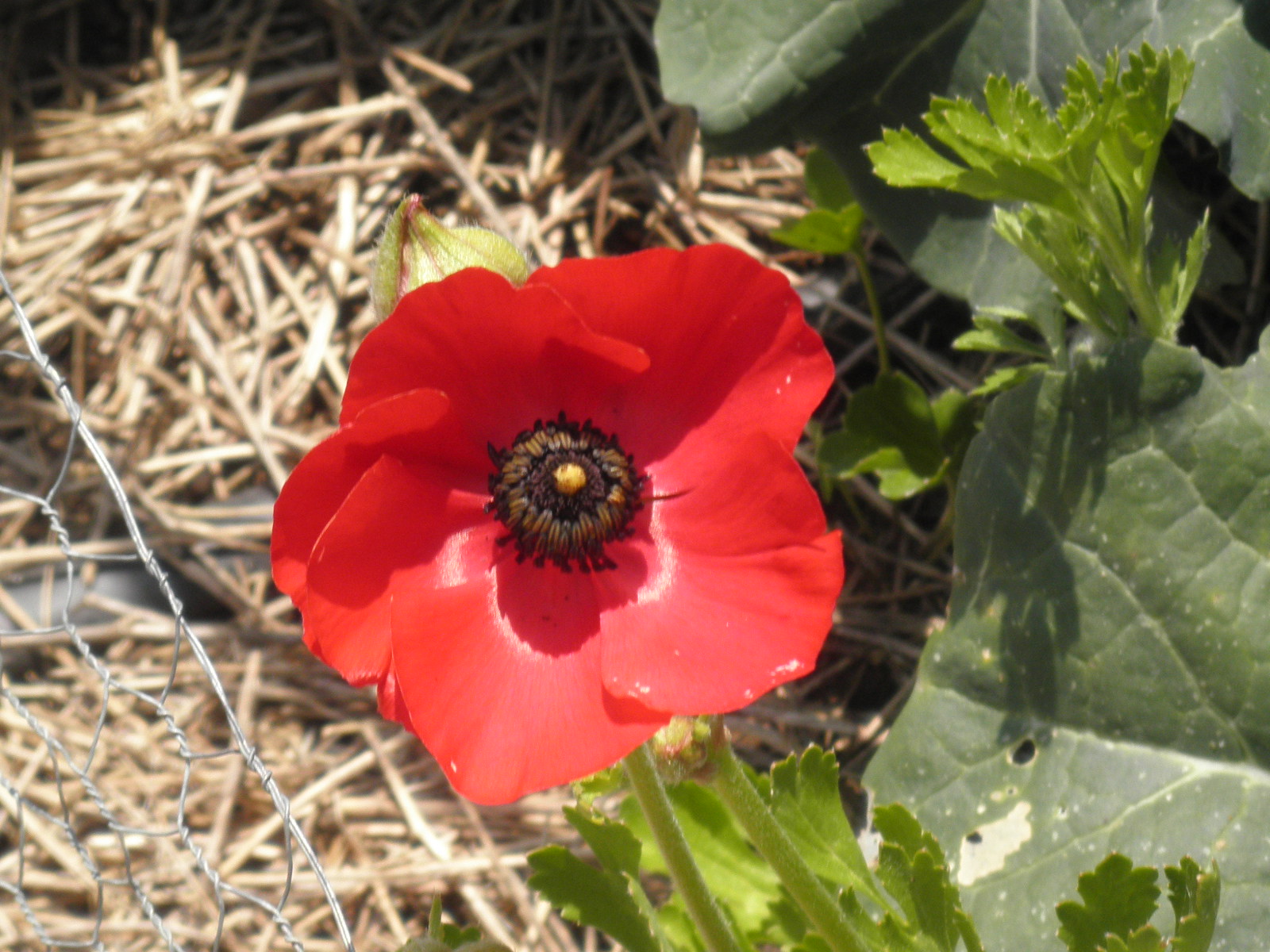
... and here is a poppy from the Australian spring flair taken at a recent open garden, a poppy very much in season ...


Footnote ...

Here is the text of the interview with Sylvia Plath by Peter Orr (of the British Council) - recorded on 30 October 1962 (just after her 30th birthday) ... Interview Sylvia Plath 30 Oct 1962


Thursday, October 20, 2011

Weather Signs - Janne D Graham


WEATHER SIGNS

I take you there, falsely cheerful
Inconsequentially chattering about
Golden poplars and reddening maples:
Colours
Of autumn

I leave you there, apprehensive
To the care of stethoscopes
And surgery while long wet weeks
Drown me
In time

I watch you there, inert, bed-stretched
Leasing your life to pumps and plastic
As slivers of sun insinuate:
Days dredged
From night

You are released, the landscape
Of your self scalpel-scarred
Excoriated weather signs
Marking
Your time

You come home through fallen leaves
Browned and damp, unseeing,
Uncomprehending, as swirling squalls
Sweep in
Our winter

© Janne D Graham
1990 (edited 2011)

The above poignant poem was given to me by Janne, a member of our U3A poetry appreciation group. There is plenty of space for the reader to construct their own image to the situation and develop further after reading the final stanza. The weather sign of a good poem that it promotes lingering after-thought in the mind of the reader.

Tuesday, October 18, 2011

The Door - to Poetry Perhaps


The Door

Go and open the door.
Maybe outside there
’s
a tree, or a wood,
a garden,
or a magic city.

Go and open the door.
Maybe a dog
’s rummaging.
Maybe you
’ll see a face,
or an eye,
or the picture
of a picture.

Go and open the door.
if there
’s a fog
it will clear.

Go and open the door.
Even if there
’s only
the darkness ticking,
even if there
’s only
the hollow wind,
even if nothing is there,
go and open the door.
At least there will be a draught.


Miroslav Holub

At a recent ‘Gods’ poetry meeting in Canberra local poet Moya Pacey opened her session reading the above poem by Miroslav Holub. She used it as an entry to her understanding of poetry ... poetry is a door to personal discovery ... the unknown within ... and by creating your own poetry there will be a discovery ... of something within that has yet to get voice ...

... of course many are just plain content to live within the safe square of known existence ... and I have known those who continually wall up there room ... eventually an earthquake may come through circumstance

... but it is not sufficient to just open the door you need to walk through! If you just stand there in the draught you will catch cold (no don’t run back inside) ... take a good look ... then take a few steps into that big unknown ... and if you are not into poetry maybe those steps are to another life altogether ... perhaps bungie jumping or walking across the Sydney Harbour Bridge is more your thing!

Enjoy a new day - or should I say a day different from the yesterdays of your life.

Wednesday, October 12, 2011

Writing Australia ... New Federal Website


Writing Australia

A top word on the written word … for those interested in writing ...

... Writing Australia was officially launched in August …

… it is a federation of existing State Writers’ Centres in the ACT, NSW, South Australia, Victoria and Tasmania … the co-operative nature means that the sum should be greater than its components … I note that WA and Qld are not yet in the fold ... I'm sure there are a few writers around in those States.

… members of the component organisations are automatically members of the Federal Body

… The foundation National Director is Mary Delahunty … an award winning journalist and involved with such ABC programs as Four Corners, The 7:30 Report and Sunday Afternoon

… the initial program includes – Writing Australia Awards, Writing Australia Tours (where top writers give classes and workshops), and a WebSite which gives a central portal with information on writing happenings and literary events.

… the Website link is … writingaustralia.org.au

Friday, October 7, 2011

Love Sonnet LXVII – Pablo Neruda


 LXVII – Love Sonnets of Pablo Neruda
(first in spanish)
La gran illuvia del sur cae sobre Isla Negra
como una sola gota transparente y pesada,
el mar abre sus hojas frias y la recibe,
la tierra aprende el humedo destino de una cupa.

Alma mia, dame en tus besos el agua
salobre de estos meses, la miel del territorio,
la fragancia mojada por mils labios del cielo,
la paciencia sagrada del mar en el invierno.

Algo nos illama, todas las puertas se abren solas,
relata el agua un largo rumor a las ventanas,
crece el cielo hacia abajo tocando las raices,

y asi teje y desteje su red celeste el dia
con tiempo, sal, susurros, crecimientos, caminos,
una mujer, un hombre, y el invierno en la tierra.

Pablo Neruda (1959)

LXVII – Love Sonnets of Pablo Neruda
an english translation

The great rain from the South falls on 1Isla Negra
like a single drop, lucid and heavy,
the sea opens its cool leaves and receives it,
2the earth learns as a cup to fulfill its wet destiny.

Give me your kisses, water to my soul,
salty from these months, the honey of the fields,
fragrance dampened by the sky’s thousand lips,
the sacred patience of the sea in winter.

Something calls to us, all the doors turn
open by themselves, the rain repeats its rumour to the windows,
the sky grows downward till it touches the roots:

so the day weaves and unweaves  its heavenly net,
with time, salt, whispers, growth, 3 pathways,
a woman, a man, and winter on the earth.

Notes ...
 1Isla Negra … Black Island … a rocky outcrop near Neruda’s third and favorite home in Chile also of the same name
2 I have based this translation on that by Stephen Tapscott except for the fourth and fifth lines … Stephen Tapscott translates these lines as …
the earth learns how a wineglass fulfills
its wet destiny. In your kisses, my soul, give me the water,
 ... and he breaks the fourth line into the start of the second stanza
3 ST translates this as roads … I prefer pathways
(Reference: Love Sonnets by Pablo Neruda - Translated by Stephen Tapscott ISBN 0 292 76029 9.)

Comments

You don't have to know anything about the life of Pablo Neruda, or what it is like to experience rain in Chile - one of the wettest and driest of places - but context of course always helps give deeper meaning to any reading. However, what is more important is the translation - assuming of course a translation is needed. If spanish is your native tongue then you will understand this poem to the full in that language - if not you will have to rely on how this work has been represented by the translator. I have chosen the words above that I like after reading a couple of translations.

Love and the sea - inseparable natural constants  ... and the wait knowing that the rain will come ... that inherent sense ... as certain as life and death.

From Wikipedia ... On Neruda's house Isla Negra ... It is about 85 km to the south of Valparaíso and 110 km to the west of Santiago. It was his favorite house and where he and his third wife, Matilde Urrutia spent the majority of their time in Chile. Neruda, a lover of the sea and all things maritime, built the home to resemble a ship with low ceilings, creaking wood floors, and narrow passageways. A passionate collector, every room has a different collection of bottles, ship figureheads, maps, ships in bottles, and an impressive array of shells, which are located in their own "Under the Sea" room.

A national treaure ... it is on my list of poetry places to visit.

Wednesday, September 28, 2011

'Edge' - Judith Wright's Braidwood home.


Readers may be interested in Judith Wright's property 'Edge' at Braidwood. Below is a photo taken when Meredith McKinney took a walk through the grounds at the 'Two Fires Festival' in 2005. It is now in private hands but I am told they are friendly. A link to more images ...  'Edge' - at Braidwood.

Wednesday, September 21, 2011

The Wattle Tree - Judith Wright


The tree knows four truths -
earth, water, air and the fire of the sun.
The tree holds four truths in one.
Root, limb and leaf unfold
out of the seed and these rejoice
till the tree dreams it has a voice
to join four truths in one great world of gold.

-Oh that I knew that word!
I should cry loud, louder than any bird.
Oh let me live for ever, I would cry.
For that word makes immortal what would wordless die;
and perfectly, and passionately,
welds love and time into the seed,
till tree renews itself and is for ever tree –

Then upward from the earth
                   and from the water,
Then inward from the air
                   and the cascading light
poured gold, till the tree trembled with its flood.

Now from the world’s four elements I make
my immortality;  it shapes within the bud.
Yes, now I bud, and at last I break
into the truth I had no voice to speak:
into a million images of the Sun, my God.

From The Two Fires 1955
The Collected Poems

© Judith Wright

The four prime elements (earth, water, air and fire) ... are needed by the tree ... (and define the world). But what is this process (love) that creates 'a voice' from a seed ... oh that it could be known ... the key to immortality

In the beginning was the word ... the start of the process ... a never ending process as the tree continues to renew itself ... regeneration ... immortality ... for the wattle the transformation is to a 'flood of gold' ... (gold =  god with love inserted).

Like the tree ... in likewise fashion to nature ... JW defines her immortality ... and like the wattle to the myriad images of the sun ... her metaphorical God ... the truth could not be expressed by her voice (but perhaps by her poetry ... and perhaps by becoming her 'natural self').

Footnote ...
The image: a wattle in full spring bloom, near the ANU Canberra.

Sunday, September 18, 2011

Trapped Prayer


(with thanks to John Shaw Neilson)

The old man sat beside me.  I
  heard not what his old ears could hear:
 a sound, he said, from a far-off land
    comes to me, faint, but clear.

Is it, I said, from East or West?
  The soul of a trapped man
who with a firm voice spoke out loud
  the deceit that was deep of his clan.

Was he, I said, born to the truth.
  that in the mad escape of a silent day
he made by his words known
  the wrongs he had to betray.

Listen, the old man said, there are
  no words, no message comes to me;
but it is almost a voice that stirs
  like the murmuring wind in a tree.

Does he, I said, speak of winter cold
  and the isolation of a damp cell
that in the full depth of night
  seek an escape from his hell?

Is he so destroyed by fowl deeds
  that he aches for your ear.
Does he now seek communion
  to off-set his fear.

Listen! The old man said.  For all
  your needless talk you do not see,
there is a sound, a knock, a tap,
  this evening addressing me.

Is it, I said, words of love
  imperishable, wrapped with disdain
that move as a frightened dove
  out of the dark and the rain?

Is it the brave beat of his heart
  too willingly pierced to make change?
Is it the last words that he uttered
  that restlessly fly into range?

Silence! the old man said.  Don’t talk,
  don’t talk any more, don’t you see
tire me no longer now,
  for his pain is crippling me.

Richard Scutter 15 June 2011

Footnote - to recognise 50 years of Amnesty

Monday, September 12, 2011

Full Moon and Little Frieda - Ted Hughes

A line by line analysis

A cool small evening shrunk to a dog bark and the
   clank of a bucket –

... evenings are the cooler part of any day, so by saying it is cool may infer that it is not so ususal (later knowing the context, perhaps the England summer of 1962)

... if the evening is small perhaps it is insignificant … nothing much going on … then the day is shrunk (shrunk ... connected to water in later lines) … you can imagine the earth shrinking light or the light shrinking earth … there is nothing visual … the evening is reduced to sound … two noises … both strong sounds that might give attention

And you listening.

… Frieda is added to the unseen bucket and dog … TH is in the background observing his daughter listening … listening to what? … we don’t know what she has heard … but assume the dog and the bucket has been heard

... little Frieda … small evening and little Frieda go together – for a child evening is small … (we know that TH and Frieda are father and daughter and that Frieda is about a 2 years old)

A spider’s web tense for the dew’s touch.

... a spider’s web is tense and the evening dew will touch … perhaps Frieda is tense after hearing the dog and the bucket … perhaps she is now on guard for something to happen just as the spider web waits tense … perhaps TH intuitively knows something is in the offing

A pail lifted, still and brimming – mirror

... perhaps TH made the bucket clank under a tap and has now lifted the full pail with Frieda standing listening to what’s going on in the dusk? … a bucket has been lifted and it is full and no water has been spilt so care has been taken in the lift … Frieda may have noticed this … it is a mirror … but not a mirror in the dark

To tempt a first star to a tremor.

... it will become a mirror (reciprocity) with the light from the first star … the water tempting the star to see itself … are stars vain! … the star can be clever too … light can ripple on the water with no overflow

Cows are going home in the lane there, looping the
  hedges with their warm wreaths of breath –

... the exhaling cows are sending their warm breath into the hedges … we get a measure of the height of the hedge … a wreath is round and made of foliage so this is an apt description of the combination of breath and hedge.

A dark river of blood, many boulders

.. the cows are coming down the lane …  probably blocking any cars ... the lane a river … it has life and movement (blood) the cows have blood colour dark patching ... like great boulders against the pales of their skins

Balancing un-spilled milk.

...the pail is balancing water and full … the moon is full and now we have the udders full and ready for milking … swaying udders not spilling milk … just as the water in the bucket is un-spilled ... the evening also full of expectation ... and then ...

‘Moon!’ you cry suddenly, ‘Moon! Moon!’

... perhaps TH has been viewing the cows and is now surprised by Frieda’s exclamation … but Frieda has discovered something (perhaps previously hidden by cloud)… and something that she knows and can name

The moon has stepped back like an artist gazing
  amazed at a work

... the moon is distant and if it has suddenly appeared from cloud (stepped back) it will have given subtle paint to the countryside … it might be quite amazed at the effect of the shadowing an pooling of light (as a great artist might look at a painting) … it might also be amazed at discovering in its light the little fascinated Frieda

That points at him amazed.

... Frieda is amazed too and has to share with her father by pointing ... reciprocity between humanity and nature
 
Ted Hughes (from Wodwo 1967)

Summary

This poem is a poignant description based on an instant in the life of TH. It invokes a typical English country-lane scene with cows moving at dusk. It shows father-daughter intimacy and how nature and humanity are deeply integrated ...and with an element of mystery.

Comments from Andrew Motion - in the book The Epic Poise:A Celebration of Ted Hughes (edited by Nick Gammage) Andrew Motion selects this poem as a favourite and below are some AM comments …

‘The dog-bark and the bucket-clank have become the evening, swallowing its open vowels in the snapping jaws of their consonants.’ AM

Only another poet could make such clever detailed letter consideration.

And when we get to the end of the poem … to little Frieda and the moon …

This is the great, triumphant reciprocity, in which the child understands the identity of something in nature, and nature recognises, astonished, something in humanity.
            Recognises, that is, by stepping back ‘like an artist’. Suddenly the poem goes beyond its geography without betraying or undermining anything it has already given us. In a phrase, a glance, a rush, it makes us think about the relationship between art and artist, artist and audience – and about how mirrors are held up against nature. It’s a ‘Full’ poem which knows the value of things that are ‘Little’. It’s a moment withdrawn from history – and unearthly – yet tremulous with the enormous pressure of history, and absolutely involved with the truth.  AM

Another comment in the context of the personal life of Ted Hughes …

This poem is likely to be taken from when TH was living at Court Green in Devon when he was together with Sylvia Plath in 1962 and when Frieda was only two years old. It could of course have been written after the death of Sylvia when TH went back to live in Devon - we don’t know. It was published in ‘Wodwo’ in 1967 – four years after the SP suicide. This was the first time it was published and it is an important TH poem in that TH did not normally involve his family in his poetry ... it was not until near his death in 1998 that he published his acclaimed collection Birthday Letters on the SP memories.

Much has been said about the moon symbol in this poem in connection with blood and feminity . I do not think any deep significance is warranted.

But the moon was a strong ‘mother symbol’ significant in Sylvia Plath poems. (Refer Bitter Fame - Anne Stevenson pages 23-24 for a first hand account of SP and the moon).

It is sad, knowing the circumstances, that the motherless Frieda is communicating with this ‘mother symbol’ and visa-versa. And when TH included this in Wodwo in 1967 one can't help think that TH may be lamenting the fact that SP cannot see her daughter now ... she might be equally amazed ... in kin with the moon.

Footnote ...

Frieda did go on to write poetry in her own right and below is the poem Ghost from her collection ‘Wooroloo’ …

Ghost

                        Lost he came to watch me,
                        Wanting something.
                        Fearful of discovery
                        As if a dead man
                        Had anything to hide.

                        He touched me, like a blind man
                        Learning woman for the first time,
                        Fingerprint by fingerprint
                        Until he held my echo
                        In his hands.

                        He took his breath between his lips
                        To fill his hollow lungs,
                        And watched me live
                        As if he could unbury
                        How he died.

                        Piece by piece he stole me
                        Until I had all gone.                             


Frieda Hughes (from Wooroloo)

Wednesday, September 7, 2011

Talking Tanka with Kathy Kituai


Yesterday I went to the Yass Valley Writers monthly meet for an introductory workshop on Tanka given by Kathy Kituai (a Canberra poet well versed on the subject).

Some notes from the session …

. Tanka is traditionally 5 lines in 5/7/5  7/7 syllabic form … the first three lines focused on observing the natural world with the last two forming a ‘reflective couplet’.
For Tanka in english it is more acceptable to use the syllabic form 3/5/3  5/5.

. It is quite acceptable to base the 5 lines using short/long/short  long/long without worrying too much about syllables

. writing the first 3 lines of Tanka teaches observation and definition focusing on a specific object

. writing the last two lines gives an internal perspective that others may identify

. explanation is to be avoided … the text is a catalyst … the reader must discover

. reread over several days … absorb and discover … many readings may be necessary before any ‘aha’

. the third line may be a ‘pivotal line’ … read the first 3 lines then repeat the third line again with the last two … is the third line applicable to both readings? (married into both – pivotal)

. use enjambment when reading … i.e. keep twisting around the ends of the lines … there are no full stops

. when reading Tanka which is a translation the syllabic structure will disappear

. mull over words especially where there is symbolic meaning common in Japanese and Asian work (I recommend using a mind-map as a tool for personal discovery)

. try it for yourself ... to capture the moment ... to relive that moment

Two Tanka examples discussed …

red wind chimes
hanging upside down
rosellas
just out of reach
of plum blossoms

Kathy Kituai

for breakfast
we eat our eggs
without salt
starting our day with
tiny, lopsided smiles

Jeanne Emrich

If you get the chance to attend one of Kathy's workshops you will not be disappointed. It will open a new window on this poetic form and even if you do not normally use this form in your writing the concepts can be applied elsewhere to surprising benefit.

Recommended Website … http://www.tankaonline.com/